Curatorial Reflections on Real Time, Simultaneity & Concurrency
- Live-Stream; Text
- 2025
‘Simultaneity always implies uninfluenceability’ (Niklas Luhmann; Sociological Enlightenment 5; 1990). We therefore want to control what we consider to be outstanding, vulnerable or contingent. CCTVs are real-time technology and, at the same time, a control tool. By using surveillance cam-eras, we try to contain the simultaneous. Simultaneous transmission becomes active surveillance. This gives rise to the phenomenon of ubiquity, of omnipresence.
[…]
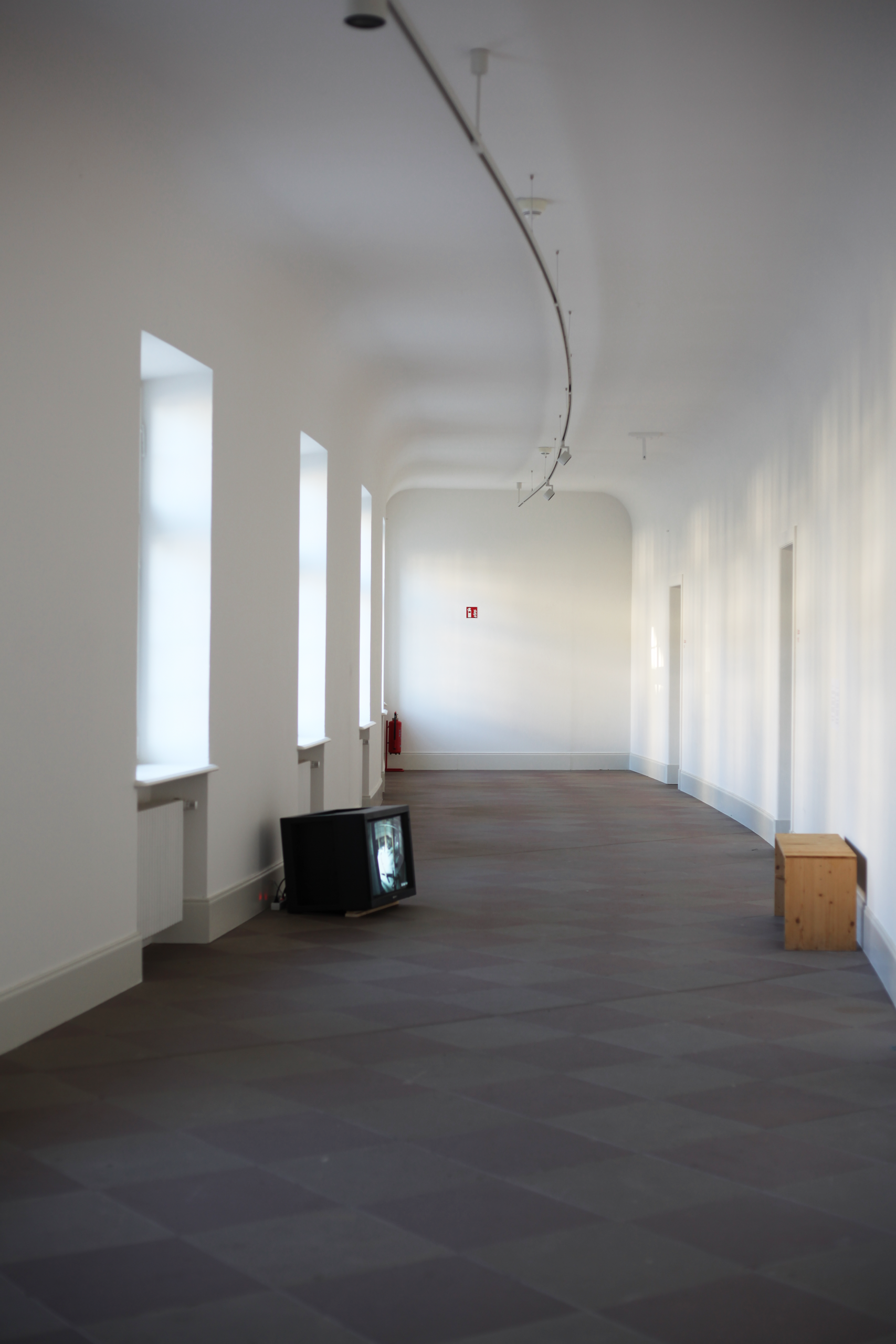
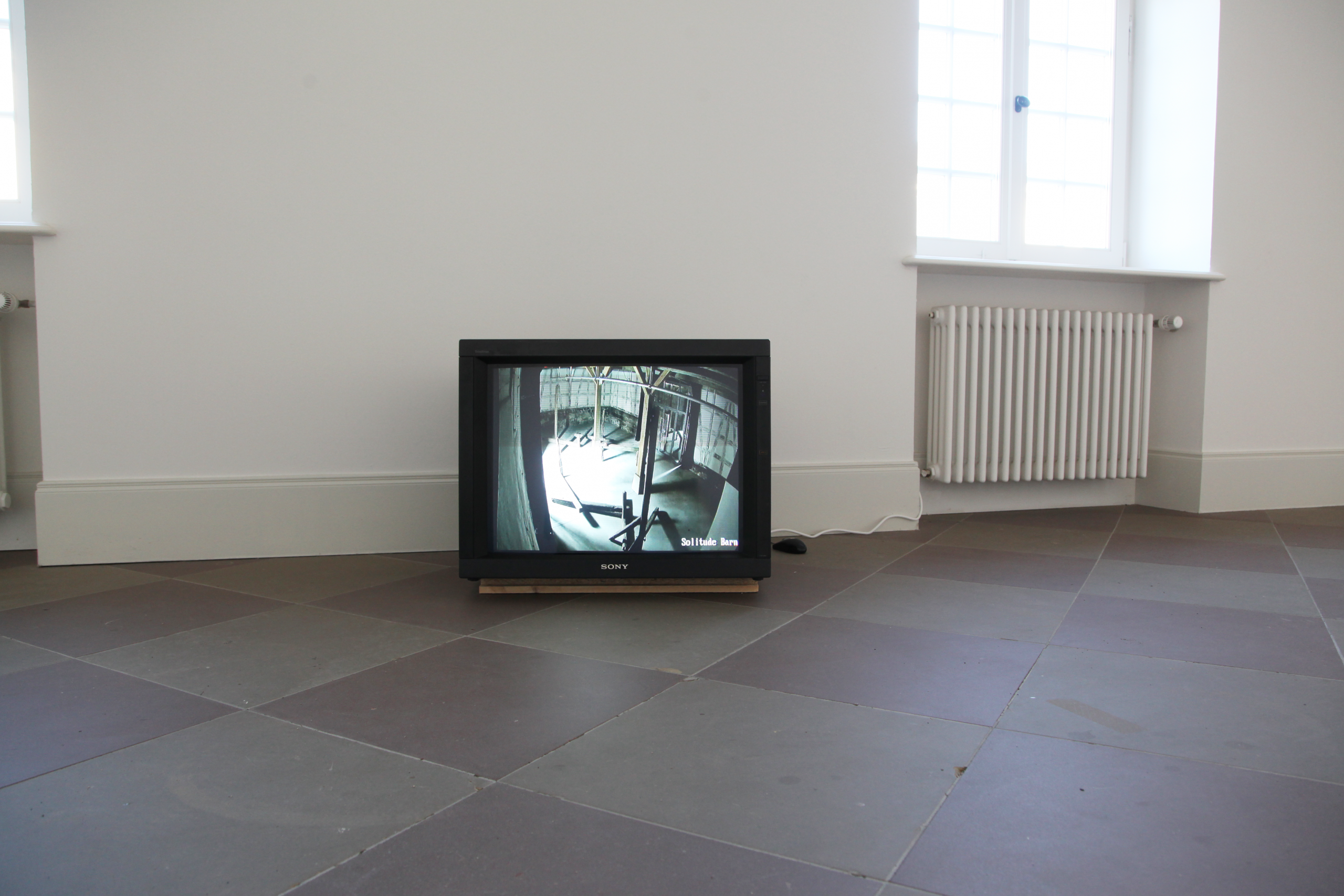
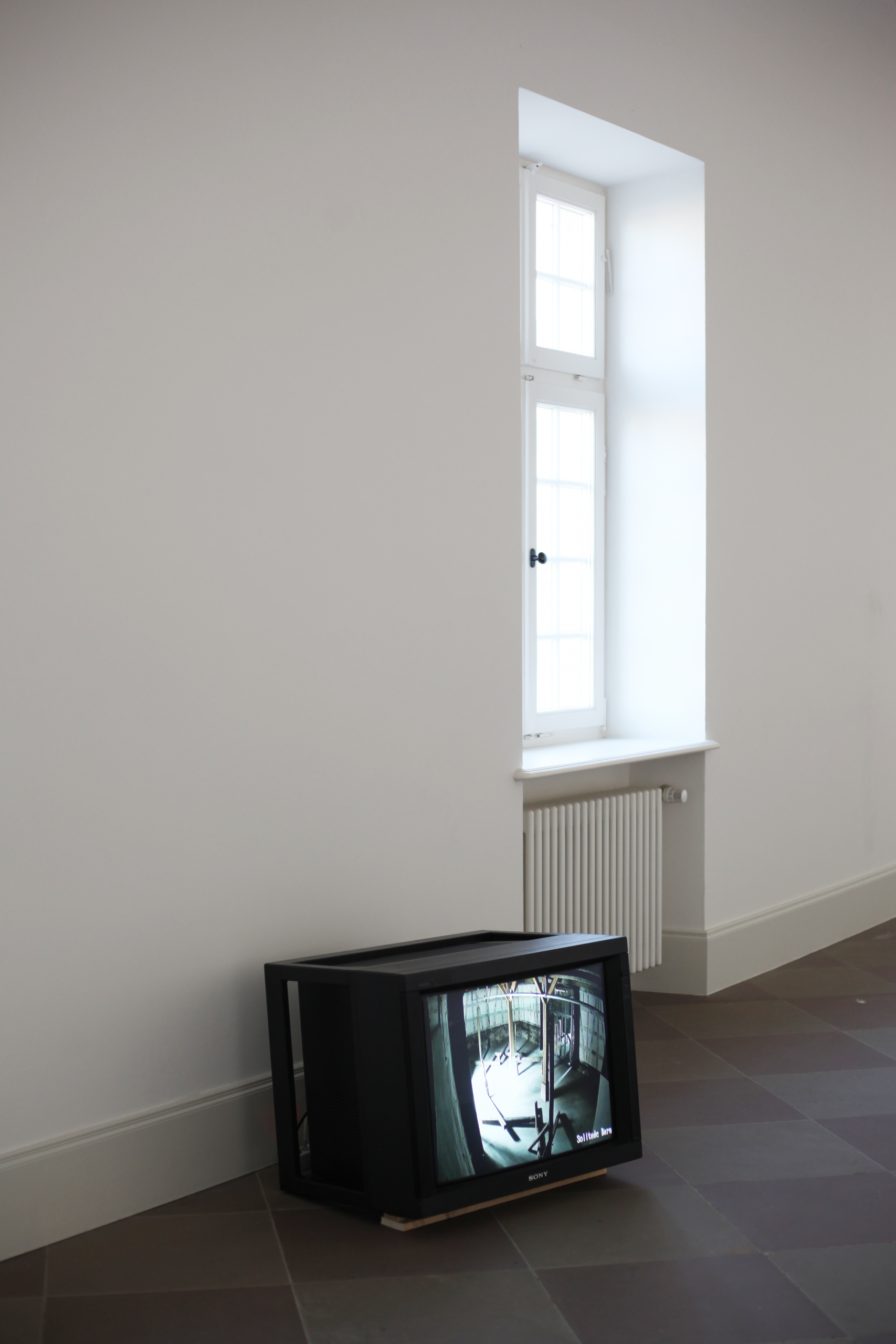
On the screen, a live stream broadcasts images from the barn of the Akademie Schloss Solitude, lo-cated about two hundred metres away. With only minimal delay, the space is displayed in real time based on the camera recording.
Using the medium of television as a reference point, events in remote places are made accessible through live broadcasts. Live transmissions represent the beginning of the real-time exchange of visual content, giving rise to “instant time”. The video technology, however, reaches its limits with its supposed omnipresence. First, live streaming is an asymmetrical medium. And Second, the digi-tal image section results in a selection. An object becomes a subject. What follows a selection logic in the surveillance situation becomes a curatorial decision in the analogue exhibition context. […] What conquers the space?
Inspired by simultaneous images in the mediaeval period and following a principle similar to that of simultaneous staging in theatre, video technique opens up a scenographic methodology of exhibit-ing. Events or objects are dislocated, i.e. spatially shifted and relocated, by technical means. A de-centralised aesthetic and an aesthetic of transience emerge. With the unlimited expansion of avail-ability, operating and access times, the exhibition experience is changing. The radius of the exhibi-tion space is expanding through the elimination of linear concepts of time and spatial limitations. The concept of simultaneity has not yet been theorised in museum studies (cf. Brandt; Simultaneity; 215; 2023).
[…]
There is no preview in real time. In real time, the material does not remain static; it remains dynam-ic. [Even if there is nothing happening.] The informational and truthful content of the images on the monitor is open to debate.
The work Structures (2025) by Atsuko Mochida, shown in the live stream, was realised during her residency at the academy. The work enters into dialogue with the barn, which cannot be used for public performances during the winter months due to space restrictions.
„Gleichzeitigkeit bedeutet immer Unbeeinflussbarkeit“ (Niklas Luhmann; Soziologische Aufk-lärung 5; 1990). Darum gilt es, das zu kontrollieren, was uns als herausragend, vulnerabel oder kontingent erscheint. CCTVs sind Echtzeit-Technologie und zugleich Kontrollwerkzeug. Durch den Einsatz von Überwachungskameras versuchen wir das Simultane einzuhegen. Die simultane Über-tragung wird zur aktiven Überwachung. Dabei entsteht das Phänomen der Ubiquität, der Allgegen-wart.
[…]
Auf dem Monitor ist ein Live-Stream zu sehen, der die etwa zweihundert Meter entfernte Scheune der Akademie Schloss Solitude überträgt. Mit nur minimalem Delay wird der Raum anhand der Kameraaufzeichnung in Echtzeit wiedergegeben.
Anlehnend an das Medium ‚Fernsehen‘, werden Ereignisse entlegener Orte durch Live-Übertragung abrufbar gemacht. Live-Sendungen stellen den Beginn eines Austausches visueller Inhalte in Echtzeit dar, die ‚Instantzeit‘ entsteht. Die Videotechnik stößt mit der vermeintlichen Omnipräsenz jedoch an ihre Grenzen. Erstens ist der Live-Stream ein asymmetrisches Medium. Und zweitens erfolgt durch den digitalen Bildausschnitt eine Selektion. Ein Objekt wird zum Subjekt. Was in der Überwachungssituation einer Selektionslogik folgt, wird im analogen Ausstellungskontext zu einer kuratorischen Entscheidung. […] Was erobert den Raum?
Inspiriert vom Simultanbild im Mittelalter, und ähnlich dem Prinzip der Simultanbühne im Theater folgend, eröffnet sich durch die Videotechnik eine szenografische Methodik des Ausstellens. Ereignisse oder Objekte werden mit technischen Mitteln disloziert, also räumlich verschoben und verlagert. Eine dezentrale Ästhetik sowie eine Ästhetik der Flüchtigkeit entstehen. Mit der schrankenlosen Ausdehnung von Verfügbarkeits-, Operations- und Zugriffszeiten verändert sich das Ausstellungsgeschehen. Der Radius des Ausstellungsraums erweitert sich um die Aushebelung lin-earer Zeitkonzepte und räumlicher Begrenzungen. Der Begriff der Simultaneität ist bislang in der Museumsforschung nicht theoretisiert (vgl. Brandt; Simultaneität; 215; 2023).
[…]
In der Echtzeit gibt es keine Preview. In der Echtzeit bleibt das Material nicht starr, es bleibt dy-namisch. [Auch wenn nichts passiert.] Der Informations- und aber auch Wahrheitsgehalt der Bilder auf dem Monitor steht zur Debatte. Die im Live-Stream gezeigte Arbeit Structures (2025) von Atsuko Mochida ist während ihres Aufenthalts an der Akademie entstanden. Das Werk steht in Dialog mit der Scheune, die in den Wintermonaten aufgrund räumlicher Beschränkungen nicht öffentlich bespielt werden kann.